Article
Sokcho: A Donghae Coast Drama Day
Walk Sokcho's East Sea coast through Autumn in My Heart: a hand-pulled ferry, a refugee village, a lake shore and a beach in one compact city corner.
Last checked: Nov 5, 2026
Map data © OpenStreetMap contributors. Pins show places with a sourced address.
The East Sea coast of Korea is long, and a drama day on it should not try to cover all of it. This day does the opposite: it stays in one compact corner of one coastal city, Sokcho, and walks the four places the site’s Autumn in My Heart guide grades for that city. Two are Confirmed and two are Reported, and this article keeps those labels visible, because the difference matters — a Confirmed stop has two qualifying sources behind it, while a Reported stop has one source and is still waiting for a second. No new filming claim is made here. Every scene detail below comes from the guide, and anything the guide leaves unverified is left out rather than filled in.
The drama at the centre of the day is Autumn in My Heart (가을동화, KBS2, 2000), the early Hallyu classic whose adult episodes were filmed around Sokcho. The guide’s own framing is the reason this day works as a day: the village, the ferry, the lake and the beach all sit in one small corner of the city, and the guide says a half day covers all four. That shape — one city, four close stops, no long intercity hop in the middle — is what makes the itinerary below honest. It is a Sokcho day, not a tour of the whole Gangwon coast, and the one famous Gangneung stop on the same coastline is treated at the end as a second day, not squeezed into this one.
Start in central Sokcho: the beach
Begin at Sokcho Beach (속초해수욕장), at 190 Haeoreum-ro, a short walk from Sokcho Express Bus Terminal according to the guide. Starting here suits a bus arrival, and it puts the day’s most open, least delicate stop first. The beach is a public beach with sculptures along the sand and a pine forest with a small park and trail behind it. It is free to walk, and the guide lists it as Reported: Korea.net lists it among the places where key scenes were filmed, and a second source has not confirmed it yet. Enjoy it, then, as a real Sokcho beach that one source ties to the drama, rather than as a pinned scene location — the walk, the sand and the pine shade are the visit, whatever scene you remember.
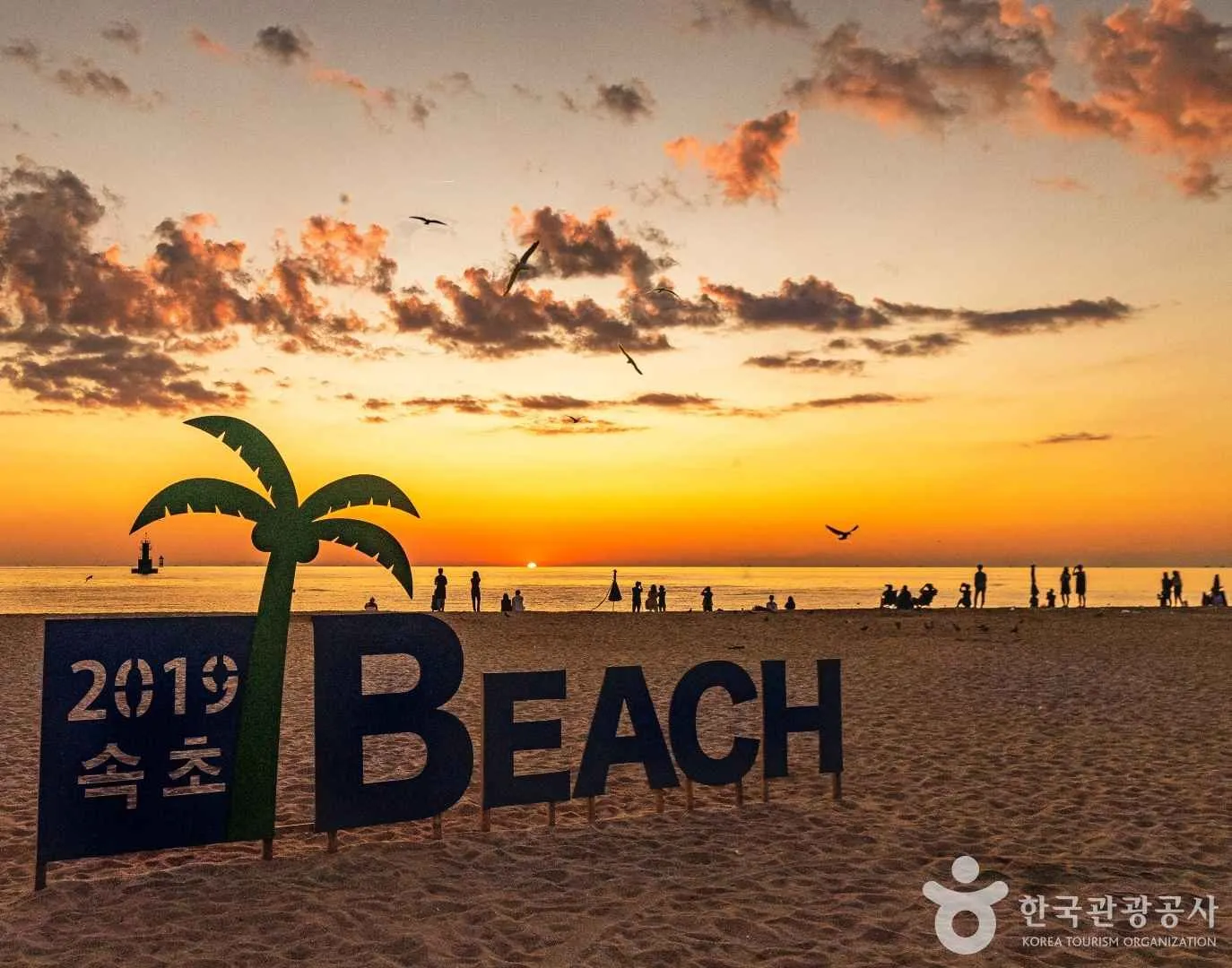
출처: 장소라, 공공누리 제1유형 (photo via the Autumn in My Heart in Sokcho guide).
One practical note belongs at the start, not as an afterthought. Swimming at the beach is lifeguarded only in the official summer beach season, so check local notices on the day if you plan to swim. Outside that season, treat the beach as a walk, not a swim stop, and let the rest of the day carry the drama connection.
Cross by hand: the gaetbae ferry
From central Sokcho, head to the gaetbae quay and cross to Abai Village by the gaetbae ferry (아바이마을 갯배), the day’s most distinctive stop and a Confirmed one. The ferry has no engine. Passengers help pull the rope that draws the boat across a channel about 50 metres wide, and the crossing takes about five minutes. The guide, following Korea.net, says local buses 9, 9-1, 7 and 7-1 stop at the quay, and the downtown-side quay sits near Sokcho Tourist and Fishery Market. That bus detail is worth keeping, because it is the guide’s own route to the quay rather than a number invented for this article.
The scene tied to the ferry is one of the drama’s best-known Sokcho moments, and the guide states it plainly: Eun-seo and Jun-seo cross paths and miss each other on this rope-pulled crossing, according to Korea.net and VisitKorea. The crossing itself is the experience — a short, hand-powered trip that has barely changed in form since the drama — so ride it slowly rather than treating it as mere transport. Fares and hours change, the guide warns, so check the VisitKorea ferry listing before you go and allow time for a queue on busy days. No fare is quoted here, because a fare printed in an article goes out of date faster than a ferry timetable does.
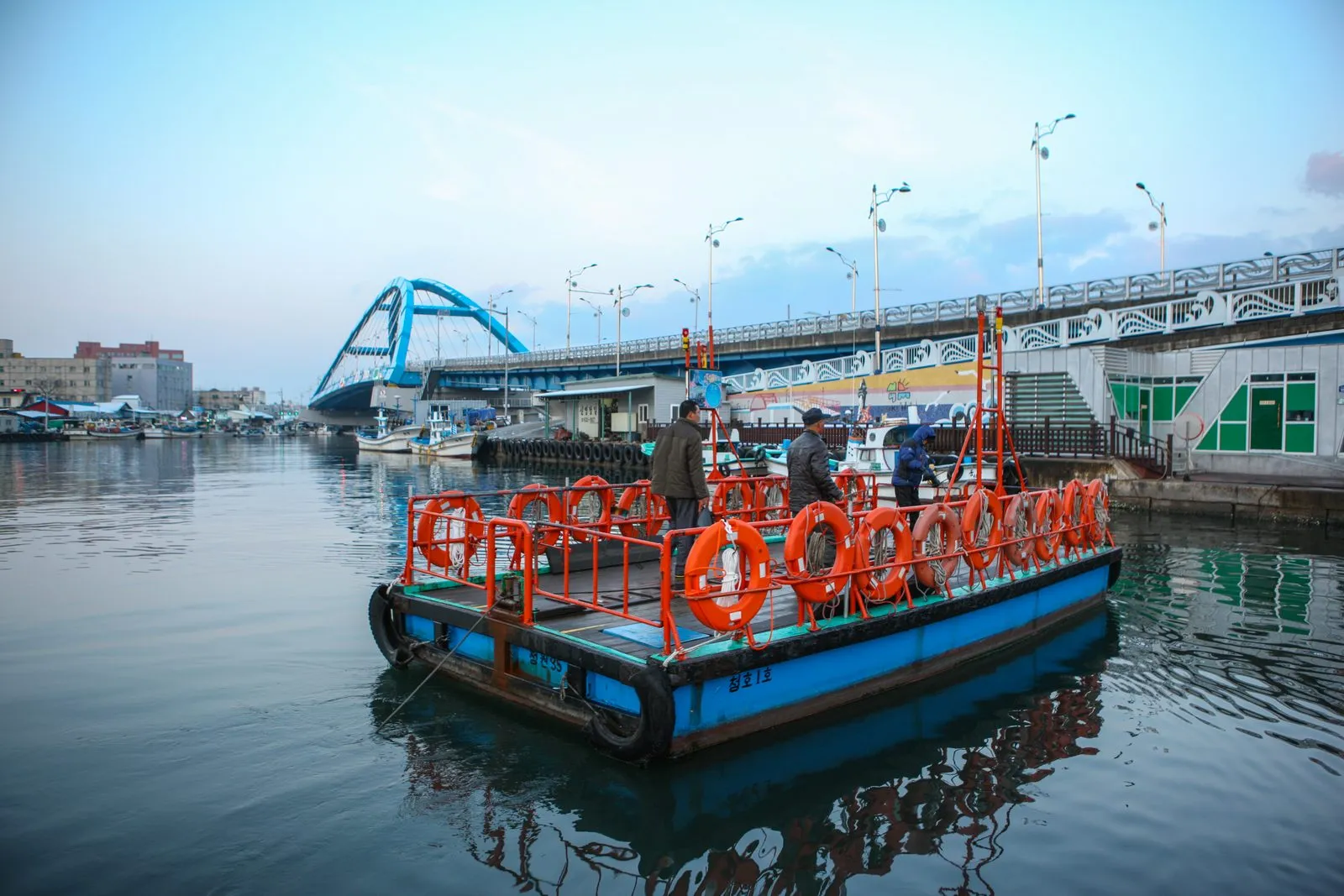
출처: 한국관광공사-Kim Jiho, 공공누리 제1유형 (photo via the Autumn in My Heart in Sokcho guide).
Walk the village: Abai Village
The ferry lands you in Abai Village (아바이마을), in Cheongho-dong, the second Confirmed stop and the emotional centre of the day. The village was founded by people who fled the North during the Korean War, and its name comes from abai, a Hamgyeong-do dialect word for elderly people, according to Korea.net. In the drama’s adult episodes, filmed in this village, a small local shop stood in for Eun-seo’s family home. The guide deliberately does not pin that shop, because it sits in a lived-in street — and this article follows the same rule. Walk the village lanes, look at the wall murals that tell the story of the displaced families, and eat in the restaurant alley, where the VisitKorea listing says North Korean dishes such as Hamheung-style cold buckwheat noodles and stuffed squid are served. Do not hunt for a house, do not photograph residents, and do not enter homes. The village is a neighbourhood first and a filming location second, and the quietest way to respect it is also the most rewarding way to see it: slowly, on foot, without a checklist of doorways.
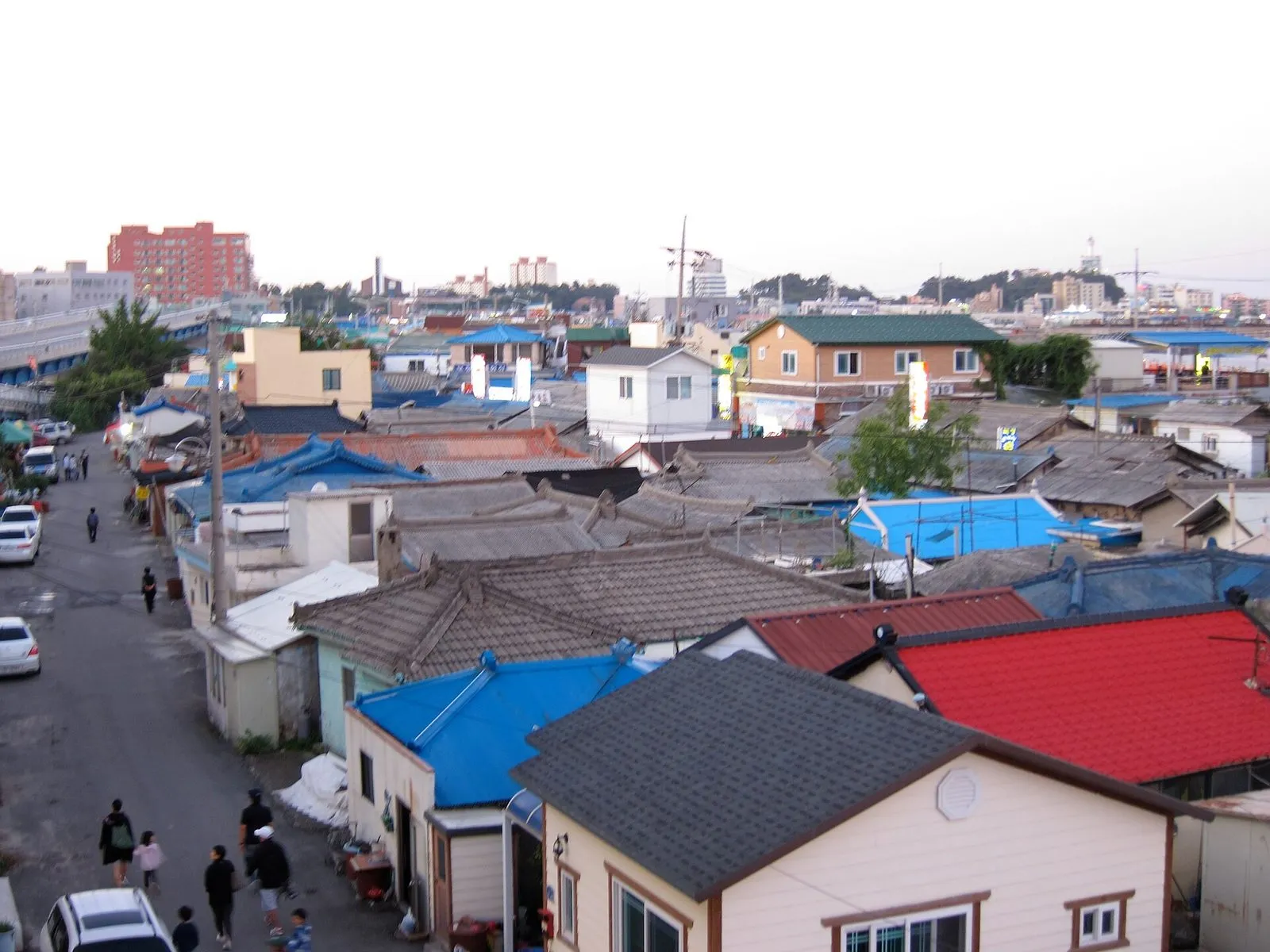
Photo: adam bee / Wikimedia Commons, CC BY 2.0 (photo via the Autumn in My Heart in Sokcho guide).
That restraint is part of the drama connection, not a limit on it. The village’s story — a community built by families who arrived with little and stayed — is the ground the drama’s Sokcho half stands on. The lanes, the murals and the food alley give you that story in the present tense, while the guide’s sources give you the filming link. Neither needs the other to be exaggerated.
Finish by the water: Cheongchoho Lake shore
End the walk at Cheongchoho Lake (청초호), at 140 Expo-ro, next to the village. The lake is a natural lagoon in central Sokcho, free and open around the clock, with a walking path around the shore. The guide lists it as Reported: Korea.net says important scenes were filmed along the lake, next to the village, and a second source has not confirmed this place yet. Label it that way in your own head as you walk it, and enjoy the shore on its own terms — the path, the water, and the two landmarks the VisitKorea listing names: Cheongchojeong Pavilion, at the end of a 75-metre bridge over the lake, and the 73.4-metre Expo Tower standing in the lake park.
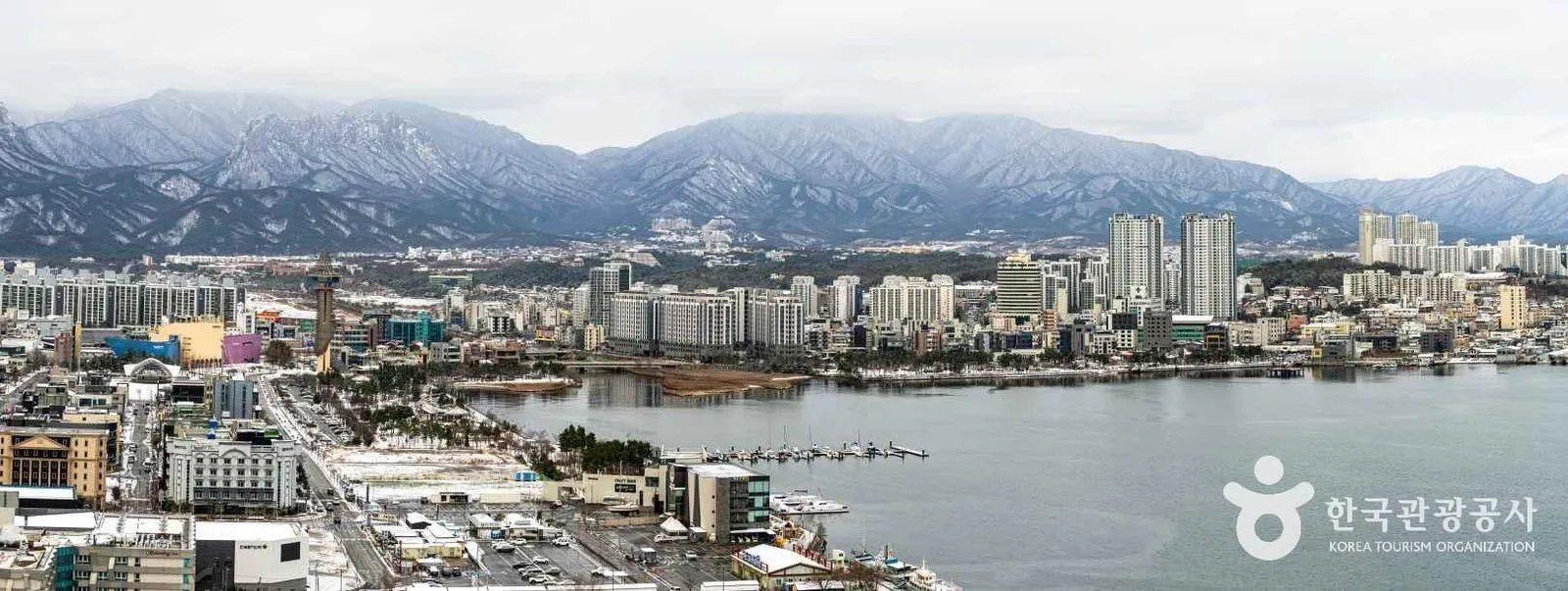
출처: Kim Jiho, 공공누리 제1유형 (photo via the Autumn in My Heart in Sokcho guide).
Ending here also gives the day a natural slow close. The beach opened the day with open sand, the ferry gave it a crossing, the village gave it a community, and the lake gives it a flat, easy walk back toward the centre. If you have the evening, the guide notes the pavilion as a night-view spot; check conditions on the day rather than assuming it, and let the lake path, not a timetable, decide how long you stay.
What this day deliberately leaves out
Two exclusions from the guide are worth stating, because a reader planning from this article should not go looking for them. First, the childhood episodes of the drama were filmed elsewhere and are not covered by the Sokcho guide; this day does not import them. Second, places travel blogs connect to the drama — the guide names Hwajinpo Beach in Goseong and a Daegwallyeong ranch as examples — have no official or press source the guide could read to confirm them, so they are not stops here either. A coast day built only from graded stops is shorter than a blog itinerary, and that is the point: every stop above can be traced to a named source in the Sources section below.
A second day, not a longer first day: Jumunjin
The other famous East Sea stop in the site’s guides is Jumunjin Breakwater in Gangneung, from Goblin, and it belongs to a second day. The Goblin in Jumunjin guide grades it Confirmed, via VisitKorea and Gangneung City, as the seaside site where Ji Eun-tak and Kim Shin first encounter by the water. The breakwater is at 1609 Haean-ro, Jumunjin-eup, free and open 24 hours, and the guide suggests 45–90 minutes for the breakwater itself, walking the east section of about 1 kilometre for the full seaside experience or the shorter west section of about 200 metres if time is short. It is reached by KTX to Gangneung Station and then local transit to Jumunjin, and the guide is explicit that the last mile is unverified on the pages it cites — so plan that leg in a map app on the day rather than trusting a bus number printed here.
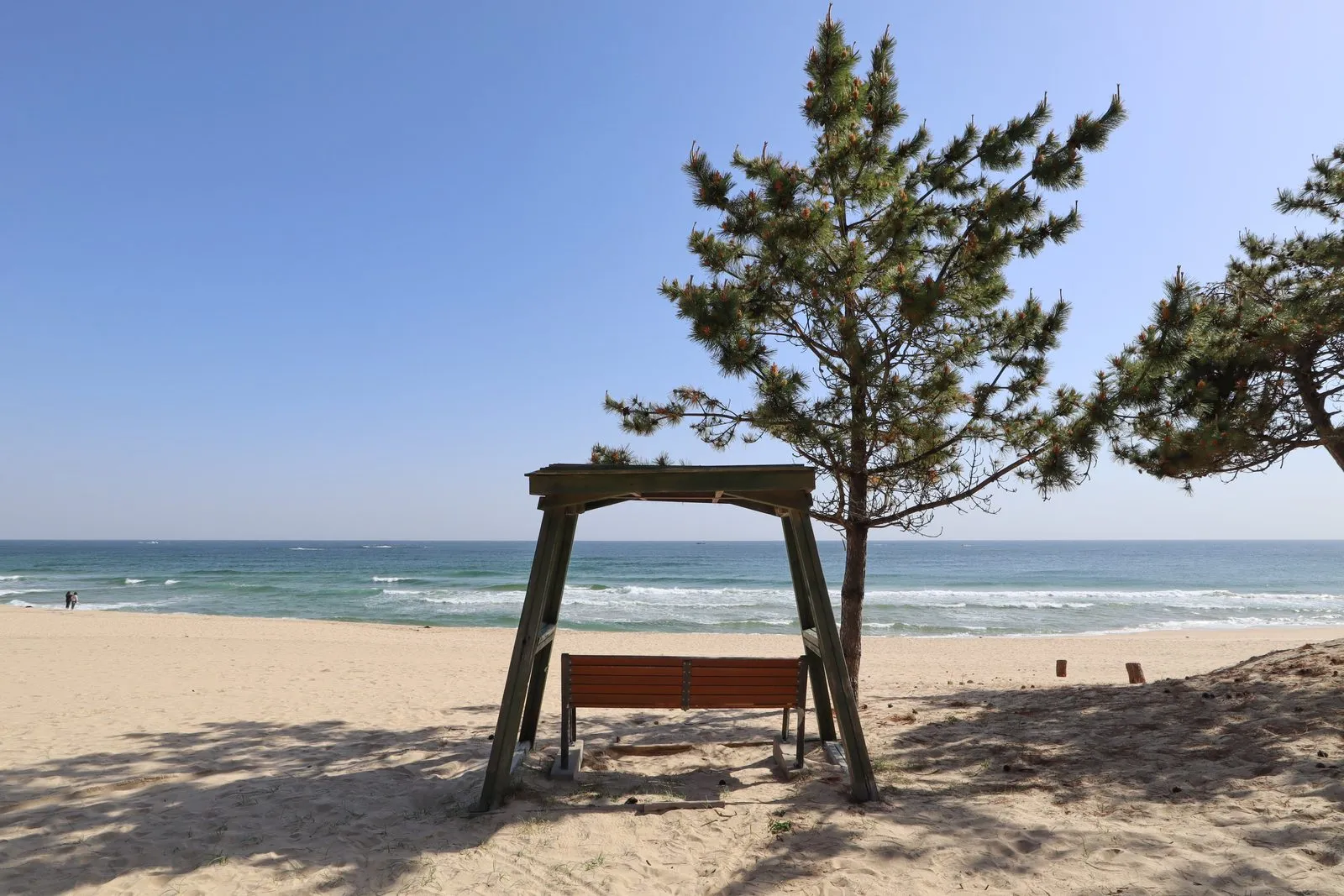
Photo: Mobius6 / Wikimedia Commons, CC BY-SA 4.0 (photo via the Goblin in Jumunjin guide).
Why keep Jumunjin separate? Because Sokcho and Gangneung are different arrival corridors — Sokcho by bus, Gangneung by KTX — and joining them into one claimed day would require travel times and connections neither guide states. A reader with two days can do Sokcho on one and Jumunjin on the other, each at the pace its guide supports. A reader with one day should do Sokcho properly and leave Jumunjin for next time. That is a better day than a rushed coast, and it is the only version of this itinerary the sources support.
Practical notes
Check the ferry’s fares and hours on the VisitKorea listing before you go, and check the official Korail site on the travel day for any KTX leg to Gangneung. The guides deliberately do not supply a last-mile bus number for Jumunjin, and this article does not invent one; the Sokcho bus numbers above are the guide’s own, from Korea.net, and they belong to the gaetbae quay only. Keep to public streets and paths in Abai Village, and remember that the village shop used as a home in the drama is not pinned for a reason. For the full stop-by-stop detail, access notes and source lists, see the Autumn in My Heart in Sokcho guide and the Goblin in Jumunjin guide.
Sources
This feature makes no new filming claim and draws its stops only from the site’s existing guides. Autumn in My Heart in Sokcho guide (updated Oct 17, 2026): Abai Village (Confirmed, via Korea.net and VisitKorea), Abai Village gaetbae ferry (Confirmed, via VisitKorea and Korea.net, including the bus numbers 9, 9-1, 7 and 7-1 and the five-minute, 50-metre crossing), Cheongchoho Lake shore (Reported, via Korea.net, with VisitKorea for address, all-hours opening, the 75-metre pavilion bridge and the 73.4-metre Expo Tower), and Sokcho Beach (Reported, via Korea.net, with VisitKorea for address and the summer-only lifeguard note). Goblin in Jumunjin guide (updated Oct 27, 2026): Jumunjin Breakwater (Confirmed, via VisitKorea and Gangneung City, including the 1609 Haean-ro address, free 24-hour access, the 45–90 minute visit time, and the east and west section lengths). The guide’s exclusions — the unpinned village shop, the childhood episodes filmed elsewhere, and the unconfirmed blog-linked places — are carried over unchanged. No scene detail beyond what those guides state is added, and no exact fare, price or ticket link is quoted.